
The universe is a living organism some say. If the planet was an organ, we must be an all inclusive tissue with water sustaining life in manners some of which are understood and some to be explored yet, collectively and individually. It is essential, not just under the covenants and procedures established by us conscious beings, but also in our personal interest to take a momentary break and think about what we truly represent through our brief existence.
With the rights we envision and have variously enumerated, come responsibilities and no Life, Liberty, Dignity, Livelihood, Healthy Environment, Privacy, Education, Speedy Trial, Legal Aid or by any other expression we may choose to identify such privileges, can be sustainably achieved without constant and consistent action by some and diligence by others. With deepest gratitude to you, the reader for helping me envision this humble endeavor to try and bring little attention to the natural splendors understood as our rivers, lakes and other natural water bodies. I seek to draw your attention to and express gratitude to those who have acted thus far and are currently actively pursuing development and advancement of these resolves. I dedicate this attempt to all such heroes and the hero within ourselves.
The relationship between environment and development has variously been explored in law. The adverse impact of unsustainable infrastructure development, disposal of untreated effluents by the tanneries and industries, of sewage and sludge into rivers has been recognized and is expressly accounted for in law. Unusually, the question usually arises at the cost of the lives of hundreds and thousands of people. It can also not be ignored that development and industries are essential and provide many with livelihood, liberty, dignity and various other privileges, but while assessing impact it’s ‘better safe than sorry’.
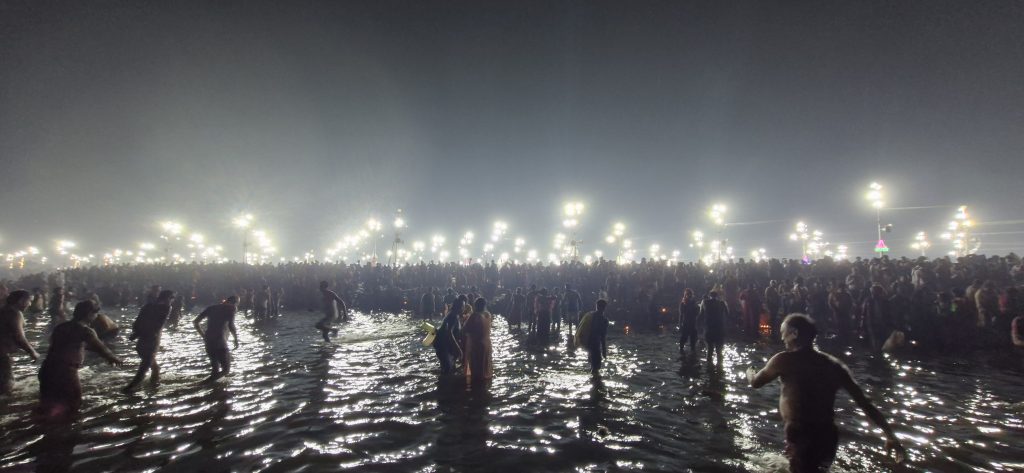
It is apparent that we see our rivers a little differently though. ‘Sacred’, as a word resonates the symbolism of rivers in traditional Indian culture. The recent Mahakumbh 2025 was a stark example of the faith entrusted by the Indian person in the symbolism around rivers and exuberated an expression of gratitude to the rivers and their relevance and reverence in our civilization. The manner in which we express our sentiments towards our rivers is also highly contiguous to patronization. In lighter vein, it’s like a toxic love relationship. Our society and Courts have been observant about the challenges and issues of waste management including size of sewers, construction of proper toilets, emersion of ashes, bodies and offerings, installation of treatment plants for trade effluents and other community building initiatives.
The Public Interest Litigation (PIL) has played a vital role with some of the leading cases and events shaping the sphere of environmental laws in India. Green benches have been set up to oversee environmental protection & facilitate speedy disposal of environmental disputes. Uncertainty in scientific opinions have been acknowledged to create problems for policy making. Principals in environmental laws such as Precautionary Principal, Polluter Pays Principle and Absolute Liability have become general part of our legal jurisprudence.
Safeguarding marine life and coastal areas has been an issue addressed whenever these gifts of nature come under duress due to hazardous activities including unsystematic commercial fishing, fish farming etc. threatening mangrove ecosystems, aquatic life and potable water. Various environment protection legislation, authorities and bodies have been tasked and empowered through the Environment Protection Act (EPA) of 1986, Hazardous Wastes (Management and Handling Rules) of 1989, Water Act of 1974, Fisheries Act of 1897, Wildlife Protection Act (WPA) of 1972 among others.
With major metropolitan cities bearing tremendous populations, a stress on drinking and other water supply and sanitary conditions along rivers, lakes and other natural water resources has arisen. The idea of addressing pollution, conditions for issuance of licenses & certificates, maintaining conformity of equipment and procedures as per pollution control laws, the Pollution Control Boards play a vital role today. It is important still to create, impart and provide physical facilities, technical knowledge and funds to those directly involved in the life and journey of the river. It has to be understood still, that projects of public utility need to be harmonized with environmental interests. There is a greater need today for all of us, from every walk and sphere of life, to resolve to become environmental heroes.


3 Responses
Well articulated and need of an hour.
Well written and amazingly put. I concur with your thoughts and vision.
Very Well Written.. It’s time to save our River’s, Lakes Etc from pollution.. Otherwise a day is very near to us when there will be no drinkable water available to us..If we will Save Environment then only we can Save Human beings…